
Bathroom & Shower Tile
Wet-area tile installation with proper waterproofing — the step that makes the difference between tile that lasts and tile that leaks.
What the Work Actually Involves
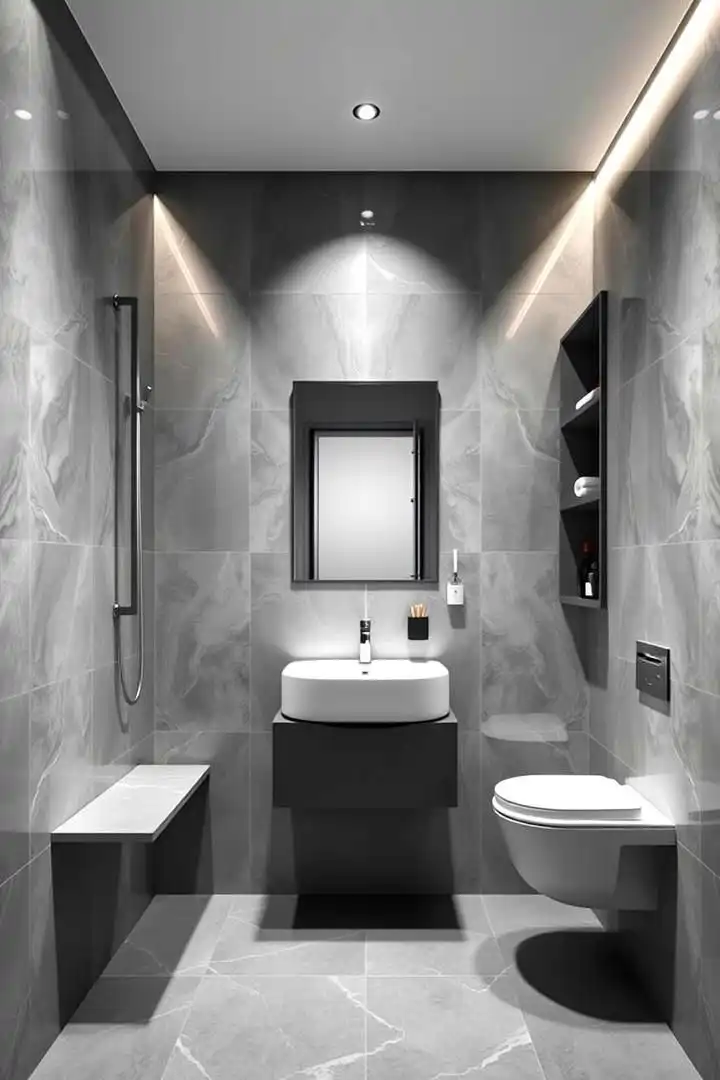
When someone's shower starts leaking behind the wall, it's usually not because the tile failed. It's because the waterproofing underneath was skipped or done poorly. Every wet-area tile job we do — shower surrounds, tub enclosures, shower floors — starts with a proper waterproof membrane applied to the substrate before any tile goes up. We use sheet-applied systems like Schluter Kerdi or liquid-applied membranes like RedGard depending on the substrate and configuration.
After the waterproofing cures, we set the tile in a modified thinset appropriate for the tile size and type. Large-format tile (anything over 15 inches) gets back-buttered as well, so there are no voids behind the tile that could trap moisture or cause hollow spots. Grout joints are sized based on the tile and the look you want — and we use a grout appropriate for the joint width and application.
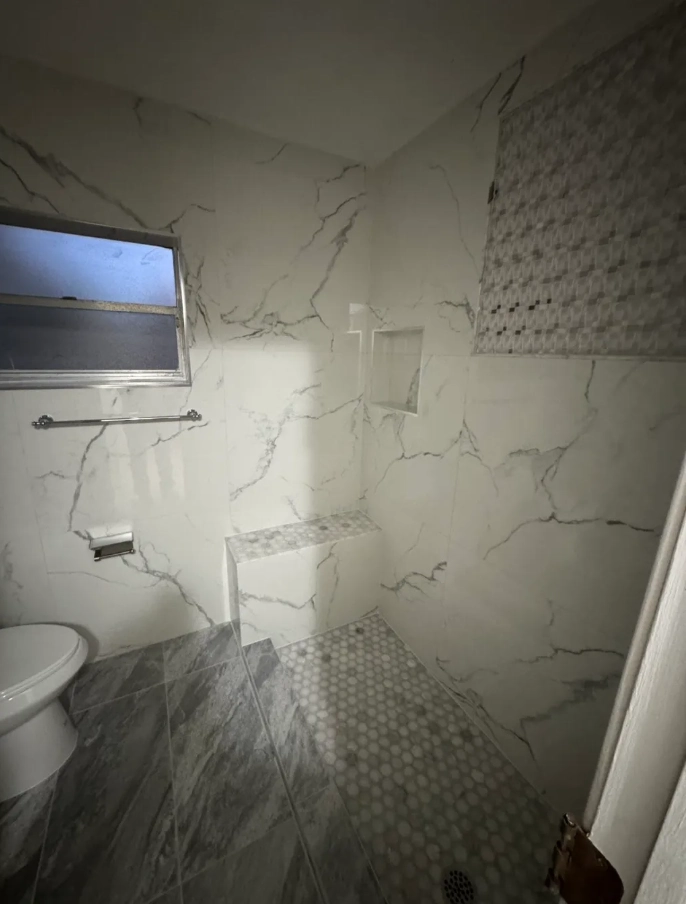
Floor tile in a shower gets a different treatment than wall tile. Shower floors typically use smaller tile (mosaic or 4x4 and smaller) to accommodate the slope toward the drain without requiring excessive cuts. The floor is sloped at roughly 1/4 inch per foot toward the drain — not a number most homeowners would know, but it's the standard that keeps water moving the right direction.
What's Included
Available In These Areas
We install bathroom and shower tile throughout Chicago's south suburbs. Our crew regularly works in:
Common Questions About Bathroom Tile
Do I need to replace the drywall behind my shower?
Standard drywall is not appropriate in wet areas — it absorbs moisture and deteriorates. If your existing shower has drywall as the substrate, it needs to be replaced with cement board or a waterproof backer before new tile goes up. Green board (moisture-resistant drywall) is also not adequate for direct tile application in showers. We'll identify what's there during the walkthrough and quote accordingly.
Can you tile over existing tile?
Sometimes, but we evaluate it carefully. Tiling over existing tile is possible if the existing tile is solid (no hollow spots), flat, and the substrate can handle the added weight. It's not appropriate in wet areas where the existing tile or grout may have allowed moisture intrusion. We tap-test every tile in the area and give you an honest recommendation.
How long before we can use the shower?
We typically ask that you wait 48-72 hours after grouting before using the shower. The thinset cure time is less critical for use, but the grout needs to reach working strength before getting wet. We'll give you a specific timeline based on the products used.
Ready to talk through your bathroom project? Call (312) 874-5999 or send us a message — we'll get back to you the same day.